





Why is it called soccer in America? Explaining the English roots of the American word for the world’s game
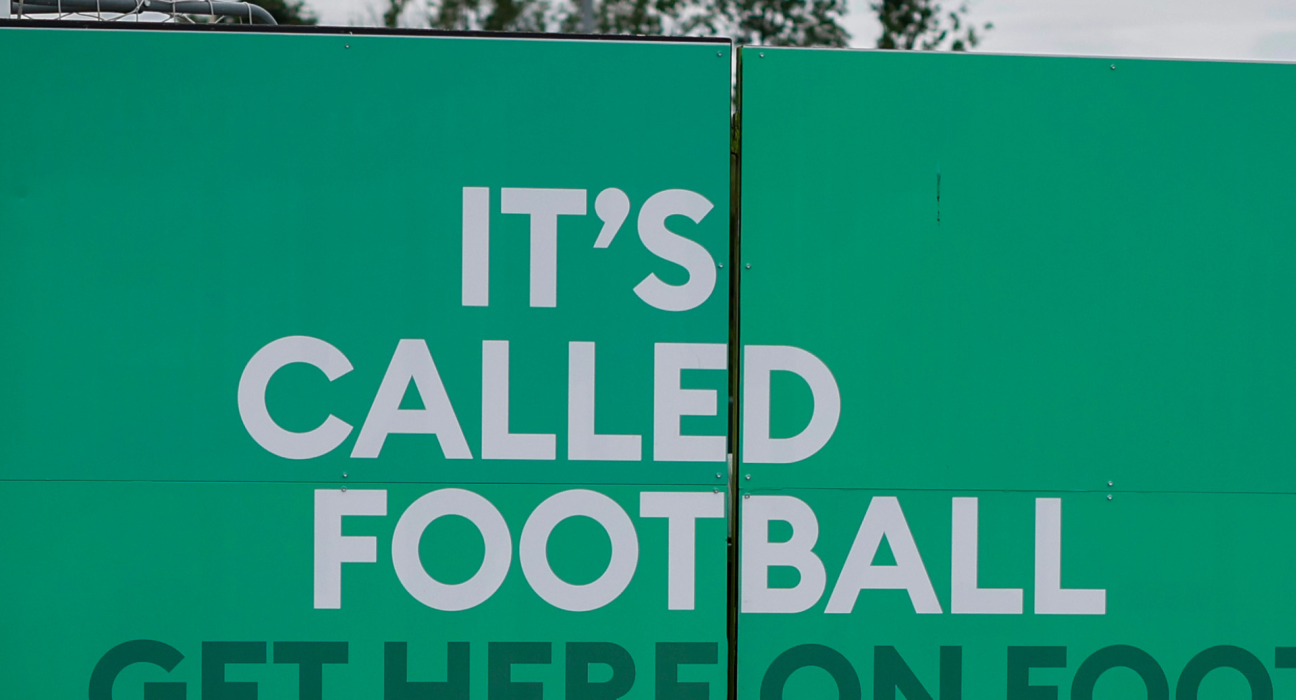
How did a sport codified in England end up with a nickname that divides the Anglophone world? The surprising history of “soccer” starts in the British school system

It’s the argument that tears the Anglophone world apart. There is so much uniting us all but how can we possibly see that until this most divisive of beefs has been squashed? How can I, a Brit, and you, based on our analytics likely a reader for America, ever see eye to eye if we cannot agree on what to call the world’s greatest sport? Football or soccer. It can only be one.
Or can it?
To really understand why everyone on my side of the Atlantic is so angry about this, we must first do some etymological investigation. Indiana Jones but with dictionaries. We know where football comes from, that all makes sense. There’s a football. There’s a ball. Apply one to the other and you have your sport.
Soccer though, what’s that all about? Well like all the best stories — Brideshead Revisited, Harry Potter, The Inbetweeners — the story of soccer is the story of the English education system. We will, however, have to come back to that after a potted tour through the social history of this sceptred isle from which I write. Now, some formative version of what we would come to know as football/soccer/futbol has been played in the country for centuries.
If instead you’d like to explore the origins of soccer in America, “The Billion Dollar Goal” tells the story of U.S. soccer’s long road to relevance, culminating in the iconic 1989 strike that ended a 40-year World Cup drought and changed the sport in America, not to mention how the game came to be called soccer in America. Stream “The Billion Dollar Goal” now on Paramount+

In 1314 King Edward II banned the playing of football “as there is great noise in the city, caused by hustling over large balls from which many evils might arise which God forbid”. There’s a man who had a vision of Argentina suffer-balling their way to the World Cup final 700 years later. Football is referenced twice in the works of Shakespeare. In King Lear the Earl of Kent refers to Oswald (steward to Lear’s daughter Goneril) as a “base football player”, an insult that you can still find on X, the everything app, to this day.
North of the border Scotland’s Football Act of 1424 states “the king forbiddis that na man play at the fut ball under the payne of [four pence] to the lorde of the lande”. That’s $24.14 in today’s money, making this perhaps football’s first pay-to-play scandal.
You can still see the remnants of a formative football in events such as the Ashbourne Royal Shrovetide Football match in Derbyshire, a county in the heart of England. Played every year since 1667, it bears some of the hallmarks of the game that so entrances us in 2026. There are two goals, but they are three miles apart. The game is split into halves, each of which last eight hours. The ball isn’t passed or kicked, but moves in something that looks like either a rugby union scrum or a punch-up outside a Yate’s wine lodge on a Friday night. Interestingly, this latter facet of the game remains and has been the preferred tactics for ball progression at Manchester United in much of the post-Sir Alex Ferguson era.
If the above can be considered football: a pre-history, then the game as we know it emerges in the public schools and factories of 19th-century Britain, where clubs looked to get some shared rules nailed down. In Yorkshire the team of Sheffield F.C. would codify their own game in the Sheffield Rules, 11 years after representatives from some of England’s grandest schools had agreed their own guidelines in Cambridge. Finally, in 1863, at the Freemasons’ Tavern on Long Acre in Covent Garden, London, the first meeting of the Football Association codified the game, with the Cambridge Rules as their guiding star. Association football was born.
Meanwhile, in the Midlands, William Webb Ellis had had a (perhaps apocryphal) revelation that rather than kicking the ball backwards, as the rules state, he could pick it up and run with it. From there came the football of Rugby School, or rugby as it would go on to be known (to this day, the governing bodies of the sport in England and Ireland remain rugby football unions). Of course, the powers that be at the FA could not allow this. They went one way, the rugby boys the other.
Following association football and rugby football, with a few tweaks, come Australian rules football, Gaelic football and, of course, the vastly inferior American football.
You might have spotted the problem here. That’s a lot of footballs. How to distinguish between them? As ever, Oxford University has the answer. Among its many gifts to the world is the Oxford “-er,” a suffix that is applied to bring an air of diffidence to conversation. Think cuppers for inter-college sporting events or Bodders for the university’s main library. To this day, it endures. Bengers, they used to call me. Well, that and some other unprintable things.
Legend has it that at breakfast one morning, Charles Wreford-Brown, who captained both the English football team and the amateur Corinthian FC side, was asked if he fancied a spot of “rugger after brekker” [rugby after breakfast]. He replied that he’d prefer to play soccer, which, it must be said, is a rather ambitious mangling of association (though it sure beats a more traditional formulation, which would have been “asser”). The lengths Englishmen will go to to avoid saying what they really feel.
For most of the 20th century, soccer and football were used interchangeably in the English sport, the former more of an upper-class signifier than any sign of interests beyond the British Isles. The greats of the game certainly took no issue with it. John Charles’ autobiography was titled King of Soccer, Sir Matt Busby’s Soccer at the Top: My Life in Football. That title alone points to the value of soccer, which is much the same as why we might refer to one of the hosts of this World Cup as any of: the U.S.A., the U.S., USMNT, the Stars and Stripes and the team the rest of the world is rooting against. For the reader and the writer, it’s helpful to not have to repeat the exact same nouns.
Stefan Szymanski and Silke-Maria Weineck note in ‘It’s Football, Not Soccer (And Vice Versa)’ that in the London Times usage of the word soccer to refer to the sport steadily rose up to 1980. In a similar study of the New York Times, where usage of soccer over football did not skyrocket until the 1970s, the age when American football began to establish itself as the dominant sport across the nation. Just like Wreford-Brown almost a century earlier, a different word was needed to distinguish these footballs. This time there was no need to invent one.
Still, soccer endured in England for quite some time. As late as 2023 you could turn on your cable/satellite/streaming television of a Saturday morning and settle down for four hours of Soccer AM before Soccer Saturday took you around all the grounds at 3 p.m.. No one, not even Matt Le Tissier, seemed to take issue with that.
And yet, anyone who has ventured onto social media and placed the word soccer in their bio will discover what short shrift that is given. I’ve seen them all, and it has to be said, this one was actually a pretty decent one.
What’s going on here? After all, it’s not like Americans are alone in calling it soccer. You’ll hear the same term in Australia and, in the right context, in Ireland. That does not seem to bother anyone.
Of course, the answer to that is even more straightforward. Even in the height of Crocodile Dundee-mania, nobody was particularly concerned about the warping effect of Australian culture across the rest of the Western world. Would French farmers have protested Supermac’s as vociferously as they did McDonald’s? Since the Second World War, much of the rest of the Western world has both quietly embraced and loudly rebelled against much in culture that has the whiff of the American to it. And if America is the largest footballing nation to predominantly call the game soccer, you can rest assured that soccer will come to be viewed as an American word.
Perhaps after reading this, you still believe that soccer is an American word. You are entitled to do so, much as there are those who are within their rights to hear English fans chant ‘It’s Coming Home’ and assume it’s an act of triumphalism. They’d be wrong, but that is their wrong to own.
Whether they realise it or not, @TikaTakaUnited [sic] and so many other soccer complainers find themselves locked in the fight against Coca-Colonisation. The word soccer to them is as American as apple pie. Apple pie, which traces its roots back to a 14th-century English cookbook.